
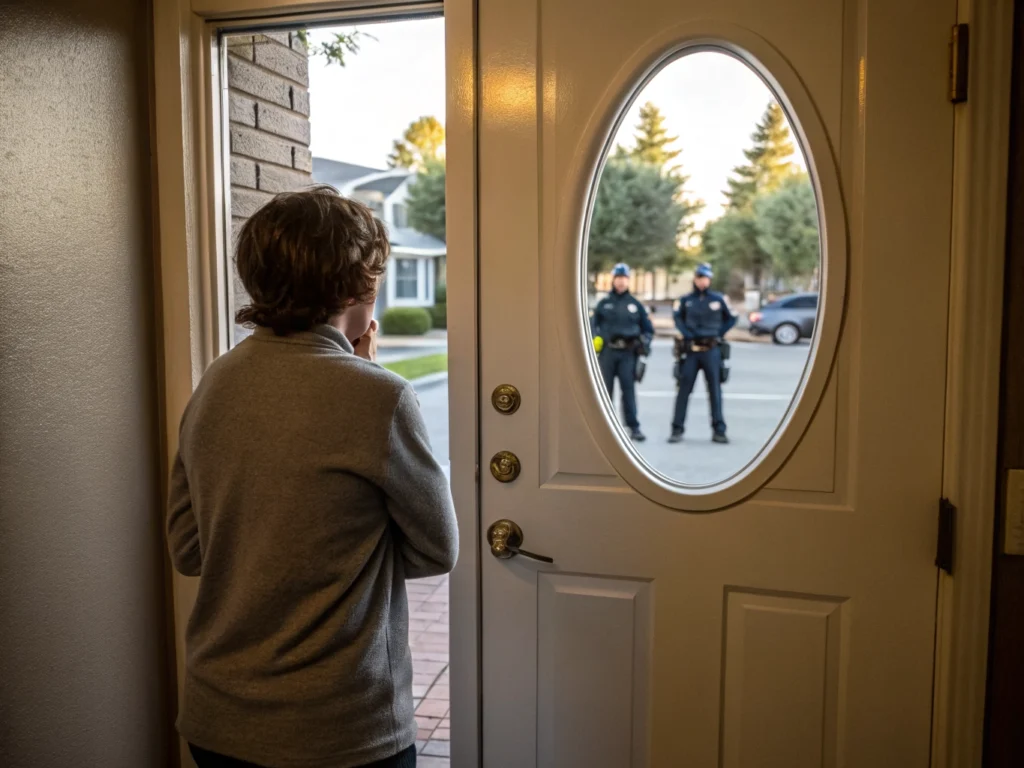
What to Do If Police Knock on Your Door
A knock at the door from law enforcement is one of the most startling things most people will ever experience. The stress of the moment, combined with a genuine desire to cooperate, leads many people to open the door, invite officers in, and start talking — without realizing they’ve just given up constitutional protections that could have shielded them.
Your home receives the strongest Fourth Amendment protection of any place in your life. Courts have repeatedly described it as the space where your constitutional rights are most absolute. But those protections only work if you know how to use them — before you open the door.
The first thing to know: you do not have to open the door
Unless police have a valid warrant, you are not legally required to open your door. This is not obstructing justice. It is not suspicious behavior. It is a constitutional right that courts have upheld consistently.
Take a breath before you do anything else. Do not swing the door open out of instinct or politeness.
Step 1: Speak through the door first
You can communicate with officers without opening your door or stepping outside. Through the door or a window, calmly ask:
“Can I ask what this is about?”
“Do you have a warrant?”
You are not being confrontational. You are exercising your right to know what is happening before you make any decisions. Officers are used to this — and their answer will tell you a great deal about how to proceed.
Step 2: If they do not have a warrant
If officers say they do not have a warrant, you have the right to decline entry. You can say, clearly and calmly:
“I’m not going to be able to let you in without a warrant. If you’d like to speak with me, I’m happy to step outside.”
You do not need to explain yourself. You do not need to apologize. A short, calm statement is all that’s required.
If you choose to step outside to speak with them, close and lock your door behind you. Stepping outside does not mean consenting to a search of your home — but leaving the door open can create complications. Keep it simple.
One important note: do not lie to officers or physically block their entry. Assert your rights verbally, and let the legal process handle the rest.
Step 3: If they say they have a warrant
Ask to see it through the door, or through a window, before you open it. You have the right to inspect the warrant before permitting entry.
When you look at it, check three things:
Is it signed by a judge? A valid warrant must be authorized by a judge or magistrate — not by the officer presenting it.
Does it describe your address specifically? A warrant authorizes a search of the location it names. An address error on a warrant is legally significant.
What exactly does it authorize? A search warrant lists what officers are permitted to search for and where. A warrant to search a garage does not authorize a search of your bedroom. Know what the warrant says before officers enter.
If the warrant appears valid, do not physically resist entry. However, you can — and should — say clearly:
“I do not consent to any search beyond what is described in this warrant.”
Then remain calm, stay out of officers’ way, and take mental notes of everything that happens. Write it all down as soon as they leave.
Step 4: If they claim an emergency
One exception to the warrant requirement is genuine exigent circumstances — a legal term for emergencies serious enough to justify entering without a warrant. Examples courts have recognized include officers in hot pursuit of a fleeing suspect, an immediate threat to someone’s life inside the home, or the imminent destruction of evidence.
If officers say there is an emergency, do not physically resist entry. But you can still say:
“I do not consent to this entry.”
Stating non-consent out loud, even when officers proceed anyway, preserves your legal rights. If the claimed emergency turns out not to have met the legal standard, your attorney will need that documentation. For more on when warrantless entry is and isn’t lawful, see our full Fourth Amendment guide.
What not to say or do
A few things that commonly backfire when police knock on your door:
Do not invite them in casually. “Sure, come on in” — even said out of habit or nervousness — is consent to enter. Once inside, anything officers observe in plain view can be used to establish probable cause for a broader search.
Do not start explaining yourself. “I have no idea what this is about, I’ve never been in trouble, I was home all night” is the kind of statement that creates problems, not solves them. The Fifth Amendment protects you from self-incrimination — use it.
Do not argue about whether the warrant is valid. If you believe the warrant is defective, that is a matter for a courtroom, not your doorstep. Note your objections calmly, do not resist, and raise the issue with your attorney.
Do not film aggressively or provoke. You have the right to document the encounter, but doing it in a way that escalates the situation creates unnecessary risk. Quiet observation is more useful than confrontation.
After officers leave: document everything immediately
If police came to your door — whether or not they entered — write down everything you can remember as soon as they leave:
- What time did they arrive and leave?
- How many officers were present?
- What did they say, and what did you say?
- Did they show a warrant? What did it say?
- What did they search, and what — if anything — did they take?
- Were there any witnesses?
This record matters if the encounter becomes part of a legal proceeding. Memory fades quickly. Write it down while it is fresh.
When to call an attorney
If police entered your home — with or without a warrant — contact an attorney before you answer any follow-up questions from law enforcement. This is true even if you believe you did nothing wrong. Anything you say after an encounter can still be used against you, and you have the right to have legal counsel present before any formal questioning.
If you need help finding a qualified constitutional rights attorney in your area, our Find an Attorney directory is a good place to start.
The phrases that protect you at the door
To recap, these are the key statements for each scenario:
If they have no warrant:
“I’m not going to be able to let you in without a warrant.”
When they present a warrant:
“I do not consent to any search beyond what is described in this warrant.”
If they claim an emergency:
“I do not consent to this entry.”
If they want to ask questions:
“I’m choosing to exercise my right to remain silent. I’d like to speak with an attorney.”
Say them calmly. Say them once. Then stop talking.
Preparedness is the whole game
The reason these encounters go wrong for so many people is simple: they’ve never thought through what they would do. The door opens before they’ve had a second to think, and the instinct to be helpful takes over.
Knowing your rights in advance — and having a quick-reference reminder somewhere accessible — changes that completely.
The Civic Guard Law visor placard and travel card set covers your Fourth Amendment rights alongside your other key constitutional protections, in plain language, designed for real moments. Keep it in your glove box, on your visor, or anywhere you can reach it fast.
Shop Know Your Rights Visor Placards & Travel Cards →
And for the full legal framework behind what police can and cannot do at your door, your car, and your phone, our Fourth Amendment guide has everything you need.
This article is for educational and informational purposes only and does not constitute legal advice. Laws and procedures vary by state and jurisdiction. If you believe your rights have been violated, consult a licensed attorney in your area.
